Good Shepherd Lutheran church

Though we welcome you joining the discussion here online, there really is no substitute for being part of the lively discussion in person. Consider joining us at one of our Bible Studies that you can find at Good Shepherd Lutheran Church. Or follow us on facebook.

Thursday, January 10, 2013

M&M: Not Just a delicious candy


I have a sister.

She is a younger sister.

Sometimes I consider her to be the laziest person in the world. Usually this comes about when I think she should be helping me.

I identify wholeheartedly with Martha.

Luke 10:38-42 is a hard passage to read for this very reason because I, like Martha, and I’m assuming like several others love lists. Whether they’re written or not I usually have about 10 lists on the go. The work list, the grocery list, the housework list, the friends list, the free time list, and honestly the list goes on! If someone or something throws this list out of whack I am so lost. I get unreasonably upset, or I try to ignore the disruption to my list and things end up in a mess.

This is how I picture Martha. I feel like she gets a bad rap sometimes as everyone says that you need to be a Mary, not a Martha but Martha isn’t all wrong. Let’s look closer. Martha enters our story as the hospitable friend. Out of the goodness of her heart she invites Jesus, and presumably all the disciples with him to her house. She cooks, cleans, offers them a place to clean up and she does it all by herself. In theory her sister Mary should have been helping her, but she was off hanging out with the guests and shirking her responsibilities as co-hostess. You’ve been in that situation. You’ve hosted the party, or helped someone with a task only to find that you’re the only person doing any work. It’s frustrating! But when she tried to go and get back-up she found herself being thrown under the bus. Hardly seems fair!

Being a Martha is being a doer. But being a doer often means forgetting to take care of oneself. Martha was so busy taking care of Jesus that she missed the opportunity that was right in front of her. She had the opportunity to be served by Jesus but she was so busy serving him that she didn’t even see it.

The funny thing about Martha is that she had an amazing faith.

John 11:25-27
25 Jesus said to her, “I am the resurrection and the life. Whoever believes in me, though he die, yet shall he live, 26 and everyone who lives and believes in me shall never die. Do you believe this?” 27 She said to him, “Yes, Lord; I believe that you are the Christ, the Son of God, who is coming into the world.”

Very similar to another person’s ground breaking (errr ground supporting?) proclamation, isn’t it?
In spite of the manner in which she is portrayed, her ultimate goal is not to follow the traditional ways beyond all else. In the passage above we see that she forgoes the only faith and culture that she has ever known and declare her belief in a prophet that the religious leaders all denied. Martha is a lot like all of us; she declares her faith but has trouble matching her actions.
The true story doesn’t revolve around the fact that Mary wanted to learn, nor the fact that Martha wanted to serve, but instead it encourages the understanding of the need for both elements.
If we were to all be Mary we would be a very well-learned bunch. We would take every opportunity to read the Word, to be attentive to Jesus’ teachings and to try and learn more each day; where would that lead us? We would know a lot but if we look to James, we know that faith without works is dead.
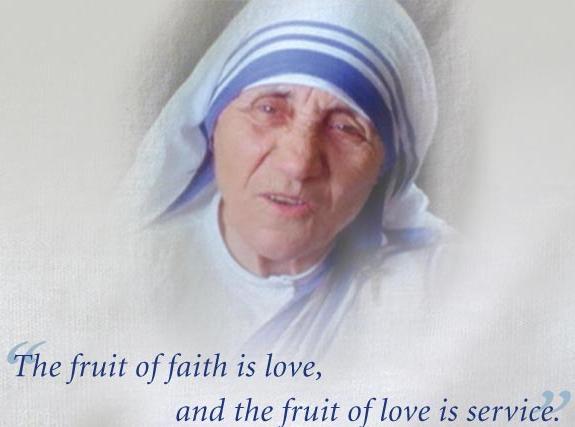
If we were all to be Martha we would be gracious(ish) servants. We would constantly be feeding the poor, donating all that we have and making sure that those around us were well taken care of; but at what cost? We would be tired and resentful. We would do what we did not because we wanted to, but because we felt that was what was expected of us.

Instead Jesus is pushing for a combination of the two women’s characteristics. First and foremost, we should be equipping ourselves. We need to be aware of Christ’s love, of what he has done for us. We should not be ignoring his teachings and going off, trying to serve everyone but ourselves. In the same breath, we need to realize that these teachings aren’t meant to dwell within us. We are called to be servants, to spread the love that we have received from Christ with all those around us.

We are not called to be Mary. Neither are we called to be Martha. We are called to constantly strive for a greater understanding of Christ and to respond to his great love by reaching out to everyone around us.

Wednesday, November 28, 2012

G is for the Gospel. G is for Grace. G is Great.


Gospel is one of those words that goes 1 of two ways:
  1. The Gospel of St Mark
  2. Law and Gospel

It doesn’t seem to be a word that stands alone. It’s 1 of 4 books describing Jesus’ life, or else it’s the counterpart of the Law. It seems like you never see the Gospel on its own.

I’m about to blow your mind baby.

Now the word Gospel is often described as being the good news. In a scriptural context it’s the good news of Christ. It is used as a way to tell all nations about the promise that has come about as a result of Christ’s coming to earth.

In a law and gospel context it’s the good news that comes about as a result of our inabilities as pointed out in the law. It is through this use of the Gospel that our sinful nature has been recognized and remedied with the life, death, and resurrection of Christ.

The gospel becomes much more than the reading that we hear on Sunday morning and more than the partner to law; it is the way we are saved. Good news is too mundane a term to describe the Gospel as it is brought forth in 1 Corinthians 15:1-2. The gospel is something that is preached, sure, but beyond that it is the promise on which we stand firm, and the promise that saves us from eternal death.

I had considered filling up the entire conversation with talk about the gospel, but it’s unfair to ignore the other g that goes along with it, which is grace.

Now if you’re like me you learned the definition for grace with this lovely acronym:

God’s
Riches
At
Christ’s
Expense

If you didn’t learn that, well, good luck forgetting it now! The other definition that I found recently is equally as lovely which describes grace as “kindness bestowed upon someone undeserving.” I love it. It describes us perfectly! What greater kindness could there be than that which was shown on the cross at Calvary? Who could be more undeserving than us mere mortals who are forever trapped in the inequity of our sins?
The writer of Romans and Ephesians describe this condition of grace as follows:

Romans 11:5-6:5 So too at the present time there is a remnant, chosen by grace. 6 But if it is by grace, it is no longer on the basis of works; otherwise grace would no longer be grace.

Romans 3:23-24:23 for all have sinned and fall short of the glory of God, 24 and are justified by his grace as a gift, through the redemption that is in Christ Jesus,

Ephesians 4:7:7 But grace was given to each one of us according to the measure of Christ's gift.

Ephesians 2:8-9:8 For by grace you have been saved through faith. And this is not your own doing; it is the gift of God, 9 not a result of works, so that no one may boast.

We are chosen by grace. We don’t do anything to deserve it, in fact we can’t do anything to deserve it because we all fall short, we all are sinners from birth who can do nothing but be terrible. But, we are reminded that the good news that we have received, the promise of salvation comes about according to Christ’s gift and nothing that we have done.

As much as we try to hammer home the point this idea of free grace it’s hard to think that we could receive something without working for it.

This is where our Gospel and grace coincide. They’re like the peanut buttah and the jelly. They really need one another to really make sense. So you’ve got the Gospel, the good news which is super but unless you can apply it to yourself, it’s not that great at all. When it’s just a message floating out there, not really applicable to anyone, it’s no good. Sinful beings though we are, we can’t claim it as our own; we need someone to give it to us. Here’s where we get our message of grace. Grace is the message that this good news is applied to you. Without the message of the Gospel, grace is pointless. Grace without the gospel is like a present with nothing in it…just terribly disappointing.

This is then our letter G- Gospel and Grace. The message that Jesus came to earth, that he lived, died, and was resurrected and even more than that; this was done for you because you couldn’t ever do anything to deserve it. Due to the fact that you are a total screw-up, due to the fact that I’m a total screw-up the Gospel message was given to each of us, through the grace that can only be found in this sacrifice. 

Monday, November 5, 2012

Living in Hope


One of the greatest moments in my life came the week I was leading the study. I got the chance to reuse my joke about hoping that the Riders would win the Grey Cup and because it was entirely new group of people, they all went for it! Score one for Amanda!!

This wouldn’t be a proper bible study on hope if I didn’t use Hebrews 11:1. Have a peek and you’ll see why…

Now you know the definition that we’re using and we can move on from there.

Things hoped for; what does that look like? What do we really hope for? In everyday conversation you might hear someone say “I hope this wind lets up,” or “I hope that never happens to me.” The hopes that are being expressed are describing something that isn’t currently happening. It is currently windy; you wish it were not. You are currently afraid of something; you wish that you would not be. If the only child says “I wish I had a sister,” it sounds normal. When I, with one young sister say, “I wish I had a sister,” people look at me funny. When we put our hope in Christ, what we’re saying is that our hope is in something better than what we have in this world.

Unfortunately, in using the word hope as any of us would use it in a sentence, it creates a simile to wish. And a wish is something that we want, but realize is not a certainty. Our hope in Christ is different though, because it is a certainty. We have the wisdom of those who have gone before us. Our hope is built on the faith given to us by the Holy Spirit, but solidified by the hope that was shown by the writers of the gospels and the people of the Old Testament who lived out their faith in everything that they did.

Our hope is one that extends beyond the boundaries of this life here on earth. Our hope is that which is found in 1 Thessalonians 4:13-14. We state every week that we believe in the resurrection of the dead and the life everlasting. Everything else that has been said has been leading up to this statement: Our hope is in the resurrection. There’s no other reason that we are without ignorance in death, that we live unlike those that have no hope than the fact that we believe that Jesus died, rose and ascended into heaven and he promises that we will too. Our hope is in a resurrected Saviour and the promise that we too will join him in eternal perfection. 

Monday, October 29, 2012

F is for Faith


And also for forgetfulness!

By that I mean, that I tend to talk off the cuff and I promptly forget what I’ve said 5 seconds later, never mind a whole week later!

But sometimes I forget about my faith in my everyday life too.

Mostly this happens when things are going just terribly. I lose faith in God’s abilities and in try to fix things on my own. Those of you who have seen my handyperson attempts will know what a disaster this is! But that faith that I am losing, that I am forgetting isn’t the faith that comes from God. That lost faith is my own lack of understanding, it’s my own doubts and insecurities coming to the surface.

I’m sure that you don’t care too much about my doubts and insecurities, and if you do it’s probably because I’m laying on a sofa paying you big dollars to care! Since that isn’t the case let’s look instead at the faith that comes from God!

I’ve been throwing this faith word around willy-nilly but haven’t really taken the time to talk about what it is. To do so I want to throw a couple of bible verse at you Ephesians 2:8-9 and Galatians 3:23-28. So faith is a gift, according to Ephesians and according to Galatians it is what frees us from the obligations of the law. So for our definition: Faith is a free gift that frees us from the obligations of the law. That’s scripture, baby!

But of course faith isn’t something that exists only as an entry in the Oxford English Dictionary, it’s an action; something that we see happening!

We are given numerous examples of what faith looks like from the Old Testament. Peruse through Hebrews 11 for a bit and there are some amazing examples of faith. And how beautifully written is Hebrews too by the way? Just a bit of Hebrews love is all. But for serious, go have a look, and here are some fun faith bits (like Alpha-bits?) in Hebrews!

An addendum to our definition “Now faith is the assurance of things hoped for, the conviction of things not seen.” A couple things stand out: hope and conviction. We talk a lot about wishing and hoping (and thinking and praying) but it always seems like a 50/50 probability. It might happen, or it might not. I hope that it won’t snow. Now there is a possibility that it might not snow, although it’s more likely that it will. Hope doesn’t seem to have a sense of certainty attached to it; unless, of course, you read it in Hebrews, in which case the next phrase is attached, the conviction of things not seen. Our faith is not something that we view as something that might or might not happen. We are convinced that it is real; it is true, even though we cannot see it. And in a world full of people living out the adage “Unless I see it with my own two eyes…” (are pirates exempt from this?) the idea of being fully convinced of something without the physical, scientific proof is really quite the anomaly.

But lest we think that we are the only ones considered fools for our faith, continue reading Hebrews 11. Some of our greatest known biblical heroes, known for their strong faith, found themselves in this same boat. Abel had great faith and was killed for it. Abraham wandered in an unknown land for his faith. Moses cast off the privileges associated with being Egyptian royalty and lived the life of a nomadic Israelite outcast. These are our great biblical heroes. The reason why is because they were faithful. Even though they had more to gain in placing their faith in the ways of the world: keeping the best of their crop for themselves; staying at home where they would be guaranteed all the comforts they had worked for; and living in the lap of luxury rather than living out the rest of your life in the unforgiving desert, that isn’t what they chose. They took the more difficult path of faith, and even though they didn’t see the rewards during their lifetime, we see them now as having been rewarded for their faith.

Now, we aren’t being called in faith in the same way. We don’t make sacrifices, there isn’t really a desert nearby and Egyptian royalty is essentially a death sentence. So what are we supposed to do?

If we look in James we’re told that our faith is lived out through our deeds towards others. And you’re going to freak out and say SOLA GRATIA, SOLA FIDE, SOLA SCRIPTURA!!!!!! DIDN’T YOU LISTEN DURING THE REFORMATION SERMON!!!!! And of course, we’ve already defined faith as a free gift that we can’t earn, but we also said that it isn’t something that exists only in definition. It is meant to be used! I always thought that the cruelest thing a person could do was to buy a toy, say a Barbie, for a kid and then tell them that they had to keep it in the box and not play with it because, of course, toys are meant to be played with. If someone is giving you a gift, you then should have the ability to use it, to play with it. This is the same with our gift of faith. It’s not meant to sit on the shelf with our collector Barbie, it’s supposed to be used. We have the great example of how the people of the Old Testament used their faith, and we are called to do the same thing. We gotta have faith.

Thursday, October 25, 2012

D is for Diaconate


Hmm, now what reason could I have for studying this? OH RIGHT! That one where that’s totally what I do!!

Now going in I was sure this would be the easiest bible study ever. All I’d do is recount some funny DPS stories, talk about what I do, how I got into it and maybe look at the bible a bit. No big deal.

But then I started thinking; what do I do? Is what I classify now as being part of my job actually part of what it means to be a deacon? I’ve learned by now what the difference between the responsibilities of a pastor and a deacon are, but are there differences between deacons and the laity?

A lot more work than I first thought!

Now I’m a bit of a free spirit. Well, no, that’s not exactly true. I am, however, stubborn and I dislike being told what to do. Oooh that works well for someone whose main job descriptor is to help people! But I did have a point to this! My point was that as someone who has difficulty being told what to do, I always inwardly groan when I think of the “job description” of a deacon in 1 Timothy 3:8-13. Now, there’s nothing wrong with it. I think I would agree with all the points (except maybe the wife thing) but as a sinful human being I know that I can’t be all of those things all the time: Dignified, when I need to; proven blameless, well, I very rarely take the blame for anything if that counts; not addicted to too much wine, oh boy, it’s loud in here.

Looking at this list it speaks to the logistics of the job. It tells you what you need to do to accomplish the requirements of being a deacon. But why does that even matter? I alluded to it earlier when I started to question the difference between a lay person and a deacon. The answer that I can come up with is: nothing. The only difference comes in terms of intent. A deacon isn’t the person who fulfills all of the qualification, but instead they’re the people who have desired to take on this position full-time.

I want to go back a bit to the book of Acts. Particularly Acts 6:1-7. What the deacons were called to do wasn’t anything exceedingly extraordinary. Essentially it boiled down to taking care of those who were in need, something that we’re all called to do.

The thing is, our good intentions stay as that; intentions not actions. We need some form of organization, and I’d say that’s where the role of the deacon comes in. The idea is not to rise to a greater authority; to take over someone’s role, but instead to help them. The role of deacon is supplementary. You’ll notice in the 1 Timothy and Acts descriptions that the implementation of the diaconate is on an as needed basis. The diaconate is not meant to take over the role of the pastoral office, but to support it. The diaconate is not meant to take over the responsibilities of the laity, but again, they are there to support them.


Monday, October 15, 2012

C is for Cookie, I mean, Covenant


Do you know what boggles my mind? The versatility of Harrison Ford. Well, more the fact that he featured prominently in two very distinct and different, yet both wildly successful theatrical series.


The one that comes to my mind at this point in time is Indiana Jones with which I hope you are all well enough acquainted that I can just delve into my point here. The point is in their search for the Ark of the Covenant. It’s made insanely interesting in that the Ark is essentially this mystical object that provides magical powers for those who possess it.

What is at the centre of the Ark though? The title says it all; the Ark of the Covenant. Whilst the movie focuses on the physical aspects of the Ark itself, for believers in God, the importance for us is in that second part, in the idea of a covenant with God.

If you look at the Old Testament it’s a series of covenants made with God and his chosen people. From the very beginning you see in God’s creation that he makes a covenant with Adam promising him that he will be taken care of, and expecting in return that Adam would serve as a steward over the land. The covenant in this is that God provides, and man cares for His creation, and of course stays away from one of the trees.

Being the good bible toting students that you are, you know how this promise goes, i.e. not well! Man fails to listen to what God has said. And as my confirmation class wisely pointed out, “Adam and Eve didn’t listen to God and that’s why we have to wear clothes!”

I’m sure that you’ve heard these phrases, “Once bitten, twice shy,” or, “Fool me once shame on you. Fool me twice, shame on me.” Besides just hearing them I would imagine that you live fairly closely to their stated mandate where you give someone a chance and if they botch that up, well, tough luck for them next time!

Given the dismal failure of Adam and Eve in keeping this covenant with God, you would assume that God would take on a similar attitude. I would be pretty darn unwilling to take on any more promises knowing that I would be left holding the bag in the end!

Let’s look at another example found in Genesis 15:1-18 where God makes a covenant with Abram. The promise extends beyond just Abram and goes into the generations following. Abram is at a disadvantage because he wasn’t created perfect. Instead he was born into a sinful world and for the majority of his life did not believe in the God of Israel. But this was the man with whom God chose to make his covenant. In the past 12 chapters or so, however, God learned a lesson. He learned that mankind is not able to keep their side of the agreement. They tried really hard, but were unable. In this covenant we see God’s wisdom and grace as he ensures that this covenant will be kept in full by both sides by taking on the responsibility of both parties. Using the standard covenant contract of walking through the blood of sacrificed animals, God passes through, representing both parties and ensuring that this covenant would be upheld.

In the Mosaic covenant it becomes even more blindingly apparent how inept we are at keeping a covenant with God. In this covenant we are given rules that directly benefit us, and even so we are unable to keep them.

It takes a little longer this time but once again we see God taking on the same role as in the covenant with Abram in his promise of the new covenant. Jeremiah 31:33-34, Hebrews 8:8-13, Matthew 26:26-28 all talk about the promise of the new covenant. God has promised us that we will be given eternal life, that our sins will be forgiven and that He will make sure that it’s all taken care of. The sacrifice of Christ’s own blood is the covenant contract that enables us to live in this promise. In various circumstances God’s people showed how unable they were to keep these promises on their own. In the same way we know that we would also fail in living up to these promises.

But even while we were still sinners, Jesus died for us. Even though there was no way we could ever repay Him, God sent His son so that the promises we made to God might be kept. We know that we could never be righteous enough to enter into a covenant with God and keep it in its entirety. This is why we rely on Christ. His sacrifice, His blood, His love is the reason why God’s covenant remains.

Saturday, September 29, 2012

B is for blasphemy


Let’s say you live in the great land of Saskatchewan. It happens to be the September long weekend. And on this weekend you are at Taylor Field wearing a jersey of blue and gold. Now in unison I hear you all cry out, “BLASPHEMY!”

Similar situation: It is this same Sunday, you are on your way home to watch the Labour Day Classic, when you realize that you don’t have the necessary green and white munchies to watch the game. You stop in at the local Sobeys (because their logo is green) and are lamenting to the person in front of you in the line at how long this is taking. Said person turns to you and asks why you didn’t come in earlier. Your reply: I was at church. Said person gives you the hairy eyeball whilst proclaiming “I don’t believe in all that God business.” Now in unison I hear you all cry out, “Meh. To each his own.”
 
It’s funny how the word blasphemy has been turned around for us.

To get all fancy with you for a moment, let’s look at the etymology of the word blasphemy. It comes from the Greek blasphemia which simply means to speak harm. So while you’re not wrong in using the word blasphemy to express the horror of cheering for the bombers; it certainly does speak measures as to what we deem to be important.

Prepare your minds to go way back in time to a time before times: A time called the Old Testament. In your hands you will find an old crumbling book called Leviticus. In this book, in the 24th chapter you find something disturbing. You find something which talks about speaking harm against God, and as a result facing death. It gets worse than that as you read on to discover that there is no turning a blind eye even for those that don’t believe. Blasphemy in this book is a really big deal! It’s so important that even those people who seemingly don’t know any better are called to be punished for speaking harm against God!

You return back to modern day Saskatchewan and you’re still a bit shaken up by what has happened. You worry about what you’ve said, and you’re afraid that you deserve to be punished by death too! Let’s be honest here, you absolutely do! You and I have both said things that blaspheme against the name of God. We have broken the first commandment so many times that we can’t even keep track anymore! There is of course something even greater at work in our lives. Although we realize that we deserve death for the things that we have done, we also remember that we have a loving saviour who died for all of our sins.

Let me recount a personal story. Whilst on my internship I was doing a children’s message one Sunday morning. During this message I was telling the kids about no matter what sin you have committed, Jesus will forgive you. Of course I had one young boy who was obviously smarter than I was and piped up, “What about the unforgivable sin?”

So, what about the unforgivable sin? What do we do with the passage in Mark 3 (and the other synoptic gospels) that tells us about the sin that can never be forgiven? What does it mean to speak harm against the Holy Spirit?

To see the Holy Spirit at work we can look at verses like Matthew 3:11 or John 3:5 which tell us about the gift of faith that we are given through the Holy Spirit. It is this gift of faith which saves us. Through the gift of faith we are forgiven. But as with any gift, it can be rejected. We don’t have to keep, use or believe in the gift of faith. This is when we start treading on dangerous ground, when we blaspheme against the Holy Spirit.

When we deny the power of the Holy Spirit, we deny the miraculous nature of Jesus, we deny ourselves the forgiveness of sins. This unforgivable sin is not saying that we are unworthy of forgiveness, but rather it’s us saying that we do not want to be forgiven.

Rather than leaving you with the fear of your salvation ringing in your ears, I want to leave you with the reminder of Romans 8:38-39 “For I am sure that neither death nor life, nor angels nor rulers, nor things present nor things to come, nor powers, nor height nor depth, nor anything else in all creation, will be able to separate us from the love of God in Christ Jesus our Lord.” The threat of blasphemy, so speaking harm against the faith giving power of the Holy Spirit is real, but the promise of salvation, the sacrifice of Christ is still stronger.